
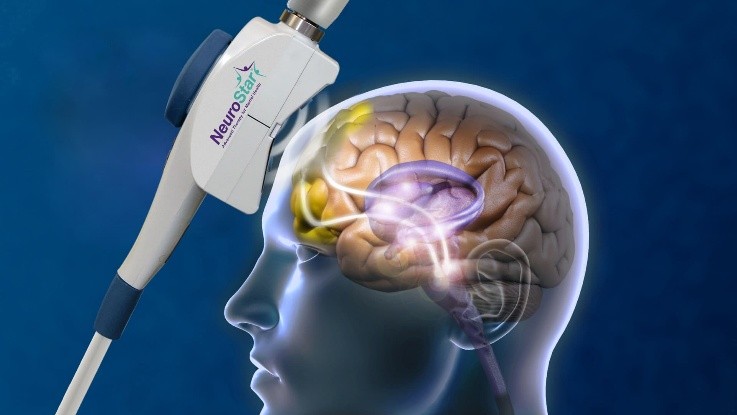
TMS Therapy:
When Depression Doesn't
Respond to Medication.
A non-invasive, FDA-cleared treatment for depression when medication alone hasn't been effective. Now offered in-office as part of our comprehensive psychiatric care — covered by many insurance plans, with prior authorization handled by our team.
FDA
Cleared Treatment
Cleared for MDD since 2008
~6wk
Treatment Course
20–40 min sessions, 5x per week
50–60%
Response Rate
In treatment-resistant patients
What Is TMS
Therapy?
TMS (Transcranial Magnetic Stimulation) is a non-invasive treatment that uses gentle magnetic pulses to stimulate areas of the brain involved in mood regulation.
Treatments are done in-office while you remain awake and alert—no anesthesia, no downtime. Tri-Valley Clinic uses the NeuroStar Advanced Therapy system, which has been FDA-cleared for major depressive disorder since 2008.
Who TMS May Help
TMS may be appropriate for individuals experiencing:
- Depression that has not improved with medication
- Difficulty tolerating antidepressant side effects
- Ongoing symptoms despite therapy or treatment
- Interest in a non-medication treatment option
Potential Benefits of TMS
- May improve symptoms of depression
- Non-medication treatment option
- Well tolerated by most patients
- No systemic side effects like oral medications
- No downtime after sessions
FDA-Cleared
Since 2008 for MDD
What to Expect with TMS Therapy
Consultation & Brain Mapping
A psychiatric evaluation determines whether TMS is appropriate for you. If TMS is recommended, a prior authorization is submitted to your insurance provider before treatment begins. This process can take some time depending on your plan.
Treatment Sessions
During the initial visit, a brief brain mapping session identifies the area of the brain targeted for treatment. Each session lasts approximately 20–40 minutes. A treatment coil is placed gently on the head to deliver focused magnetic pulses. You remain awake, alert, and comfortable throughout.
Treatment Schedule
TMS is typically administered 5 days per week over about 6 weeks. Patients are able to drive themselves and return to normal activities immediately after each session. If time is of the essence, the frequency of these sessions are flexible to make sure you get the most out of your treatment while accommodating your schedule.
Progress & Maintenance
Many patients begin noticing changes within the first few weeks of treatment. In some cases, a maintenance schedule may be recommended based on individual response.
Is TMS Right for You?
Take the NeuroStar PHQ-10 Patient Survey — a short set of questions about mood and daily functioning that helps our team understand where you are before your consultation. It takes just a few minutes.
NeuroStar PHQ-10 Patient Survey
Your responses go directly to Neuronetics and are not collected by this website. Our team will follow up to discuss your results and next steps.
Start the SurveyOpens in a new tab · Hosted by Neuronetics
Need Help Now?
If you are in crisis or thinking about harming yourself, call or text 988 — the Suicide & Crisis Lifeline, available 24/7.
Call or Text 988This survey is a screening tool, not a diagnosis. Whether TMS is appropriate for you is determined by your provider during a clinical evaluation.
Request a Consultation
Every patient is evaluated individually to determine whether TMS is the right fit. Send us your details and our team will call you to schedule your consultation and verify your insurance benefits.
TMS FAQs
It is the NeuroStar PHQ-10 Patient Survey — a short set of questions about mood and daily functioning, hosted by Neuronetics, the maker of the NeuroStar system. It helps our team understand where you are before your consultation. Your responses go directly to Neuronetics under their own privacy authorisation and are not collected by this website. After you submit, our team will follow up to discuss your results and next steps. The survey is a screening tool, not a diagnosis — whether TMS is appropriate for you is determined by your provider during a clinical evaluation.
Most patients describe the sensation as a light tapping or clicking on the scalp. It is generally well tolerated, though mild discomfort or sensitivity may occur during the first few sessions. This usually improves as you adjust to treatment.
Yes. Most patients continue their current psychiatric medications during TMS treatment. Your provider will review your medications during your evaluation and make recommendations based on your individual care plan.
If TMS is recommended, our team will submit a prior authorization request to your insurance provider. Approval is required before treatment begins, and timing varies depending on your plan.
After your evaluation, treatment begins once insurance authorization is approved. The timeline varies depending on your insurance provider.
Many patients begin noticing improvements within the first few weeks of treatment, though response varies from person to person.
Some patients maintain their improvement after the initial course, while others may benefit from maintenance sessions depending on their response and clinical recommendations. Maintenance treatment requires a new prior authorization from your insurance provider.

Dr. Japsharan Gill
Founder & CEO

Dr. Shabeg Gondara
President
Don't Wait to
Feel Better.
TMS therapy is now available at Tri-Valley Clinic. Call us or send a message and our team will schedule your consultation and verify your insurance benefits.
Mon – Fri · 9:30 AM – 5:30 PM · 680 Mowry Ave, Fremont, CA · Telehealth Statewide CA